
About the film
Craftswoman: Weaving Life Whole
Naiskäsityöläinen: Elämä Ehjäksi Kutoen
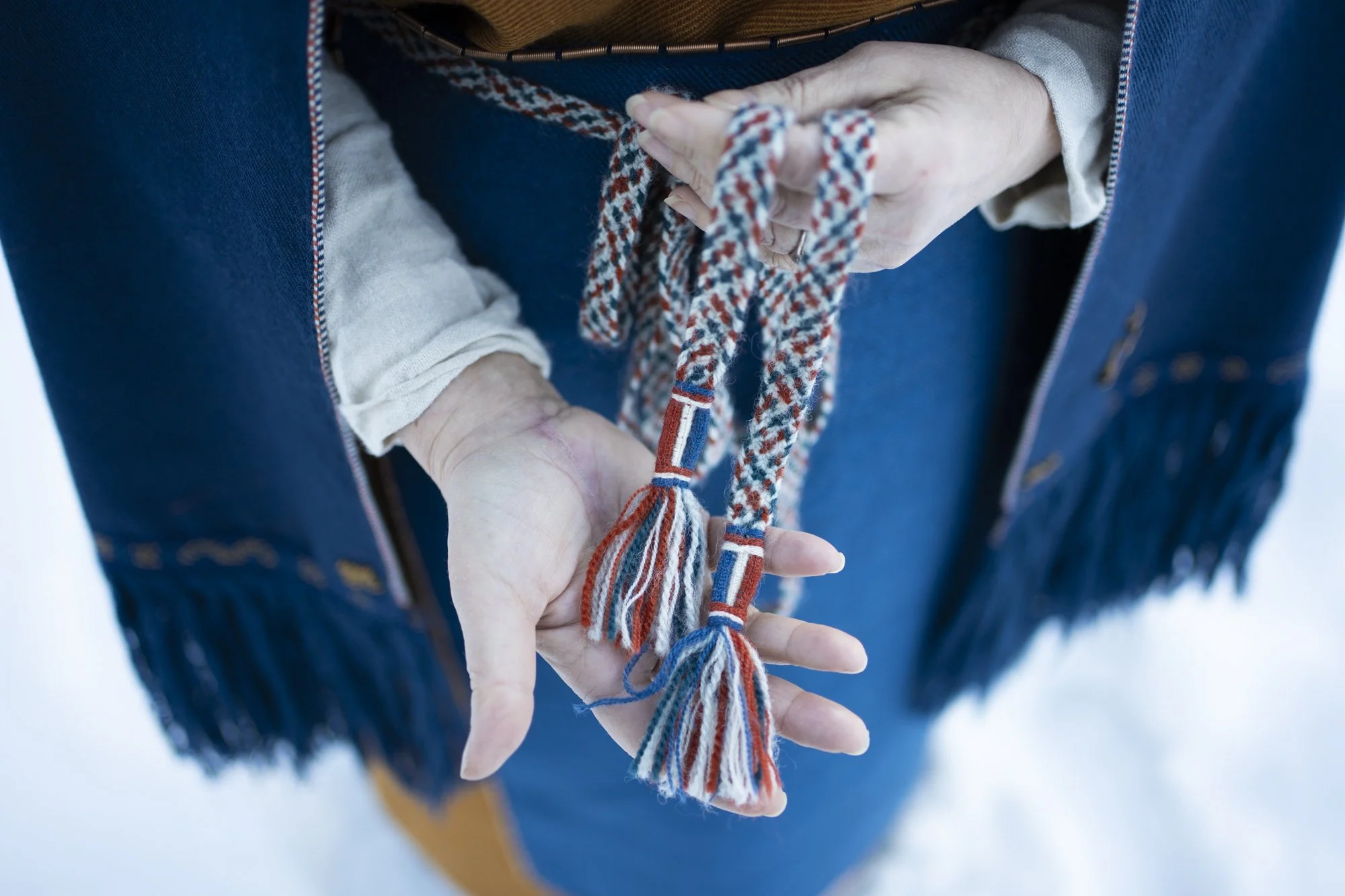
Craftswoman: Weaving Life Whole is an intimate, "embodied" documentary offering a reprieve from our fast-paced and disconnected world. Directed by a filmmaker and textile artist exploring questions about what in our lives gives us a sense of wholeness, the film shifts the focus from the final product to the healing power of “process” itself. Filmed over six months under the pace of trust, the project follows four Finnish craftswomen finding meaning in the rhythm of ancestral craft. Letting go of the typical rush of film production, the filmmaker uses a slow, spacious approach to storytelling—inviting audiences to drop from their analytical minds into their felt senses, and to remember that we already have everything we need to feel whole.
Play Trailer
Play Teaser
Synopsis
As the light shifts through Finland’s dramatic seasons, four women find meaning in the rhythm of ancestral craft. Their collective stories reveal a path to wholeness that bridges past and future—honoring unique expressions of the feminine while grounding cultural heritage in the realities of everyday life.
Process over Product
Finding ourselves in the wake of broken systems, and having surpassed our planet's carrying capacity, many of us are left feeling burned out, lonely, and disconnected. Craftswoman: Weaving Life Whole emerges at a critical moment as a salve to this suffering, elevating stories of interconnection that offer a vital path back to personal and collective wholeness. For the women in the film, this path is ancestral craft; for me, it is the emergent and intimate process of documentary filmmaking. I feel checking in with our assumptions and expectations during the production process is the path to capturing authentic stories where story owners feel truly seen and at ease. As filmmakers, we have a responsibility to steward the stories of those that trust us with them.
Returning to Wholeness
My intention with the storytelling style of Craftswoman: Weaving Life Whole was to encourage viewers to shift their attention from their heads down to their hearts and bodies. This “embodied” storytelling approach invites audiences into their felt senses to explore meaning-making from a vantage point other than the intellectual mind. We so often bypass our direct experience by over-intellectualizing what we perceive. This is not to say our intellect is “bad”—it is critical to our survival. Yet it has been prioritized and valued in our culture over our felt senses and intuition.
Film has the paradoxical potential to offer us an escape or invite us to become more intimate with the world and ourselves. The film is crafted to support a process of embodied remembering that we, moment by moment, already have everything we need to feel whole.
Director’s Statement
*Wholeness – The felt experience of being complete and not lacking within ourselves.
My work explores stories of interdependence, often emphasized in the intimate relationship between people and place. This storytelling focus comes from a deep belief that if we remember that we are not separate from each other and the natural world, we are more likely to act in service of the collective. Storytelling, in particular documentary, is a powerful medium that elevates a real-world story that people can relate to; the window into another’s life offers a mirror for us to reflect on our own.
As an American filmmaker and textile artist with distant Nordic ancestry, this project started from a personal inquiry. I have felt grief and confusion from having “shallow roots.” Over time, my family has lost good records and memories from our past and where we came from. I am curious to understand what is lost when we are disconnected from our ancestral land and cultural heritage, and thus identify why it’s so critical for humans to be connected to it.
As a textile artist with a focus on natural dyeing, I feel the most connected to a lineage when working with my hands, growing, and foraging plants. I feel like I am a part of a continuous understanding of how to work in reciprocity with the environment in which I live—just as our ancestors did.
This story came about from a chance encounter in Santa Fe, New Mexico. In 2021, I met Hannelle Köngäs, a master weaver, at the International Folk Art Market—the largest gathering of master folk artists and craftspeople from around the world, and an event I used to film every year. She was the first Finnish artist ever represented at the market. While I was admiring Hannelle’s work, she told me about her guiding principles: to use sustainable methods in terms of how she sources her materials, and to utilize weaving informed by her study of and fascination with historical hand-weaving techniques. She spoke with enthusiasm about using wool from the Finnish native sheep breed, the Kainuu Grey. As she shared, I was in awe of her joyous enthusiasm for her practice, her understanding of her ancestors' craft practices and the reverence she held for the place she came from.
I left Hannelle’s booth feeling curious about Finland and its cultural values, a place I knew very little about. It wasn’t until two years later at the market that the cosmic timing of the story idea, a funding opportunity, and meeting Hannelle again sparked this film project. Hannelle was a weaving teacher for over 30 years, and many active artisans regard her as an inspiration for why they do what they do. She introduced me to craftswomen from all over Finland who were eager to share their stories. It is through this relationship building and gaining trust that I arrived at this story. With Hannelle’s guidance and support, I proposed a film project to Fulbright Finland’s Mid-Career Professional Project Grant with the Craft Museum of Finland as my “host organization,” and it was accepted. With the generous support of these organizations, in 2025 I was able to spend six months in Finland for production.
-Madison McClintock, Director